You’re texting someone. Maybe a friend apologizes. Maybe you make a small mistake. Then they reply with just two letters — DW.
You pause and think… What does DW mean in text? 🤔
If you’ve ever felt confused seeing this abbreviation, don’t worry — you’re not alone. In this complete guide, you’ll learn the exact DW meaning in text, how it’s used, where it came from, and when you should (or shouldn’t) use it.
Let’s break it down in a clear, simple, and expert way.
DW Meaning in Text (Quick Answer) ⚡
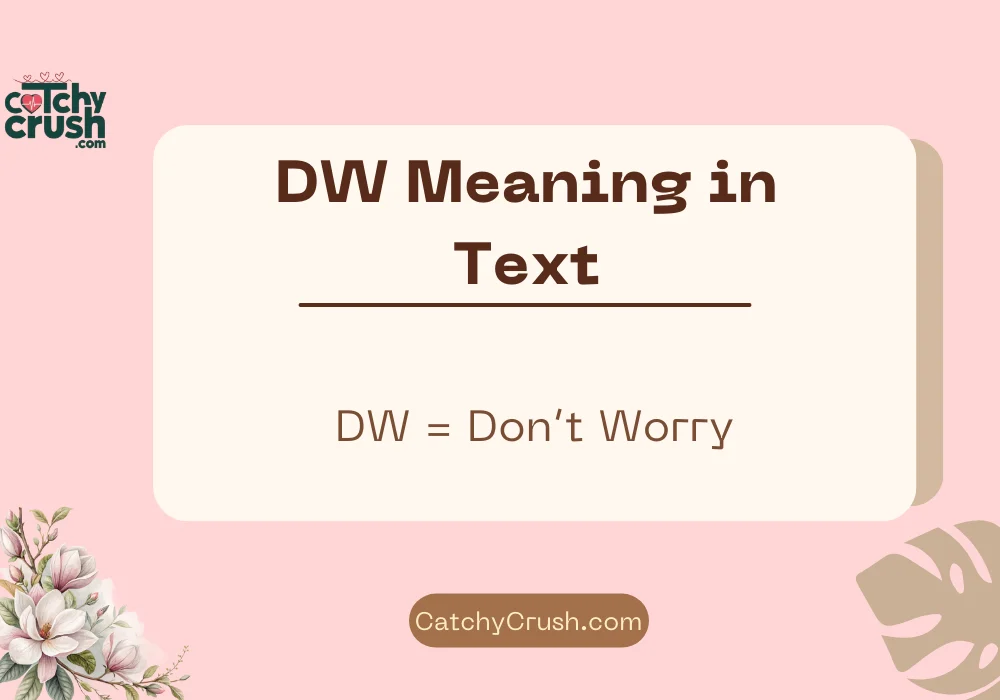
The most common DW meaning in text is:
DW = Don’t Worry
It’s a short, friendly way to reassure someone. People use DW to calm others down, reduce stress, or show that something isn’t a big deal.
Example:
“Sorry I replied late.” “DW, it’s okay!”
In this situation, DW communicates reassurance quickly and casually.
Why Do People Use DW Instead of “Don’t Worry”? 🤷♂️
Texting is fast. Abbreviations make it even faster.
- ✅ Saves time
- ✅ Keeps the tone casual
- ✅ Feels friendly and relaxed
- ✅ Common in modern digital conversations
Instead of typing 12 characters, people type just two — DW.
How DW Is Used in Everyday Text Conversations 📱
Understanding what does DW mean in text becomes easier when you see real examples.
1. Reassuring Someone
“I think I messed up.” “DW, it’s not a big deal.”
2. Responding to an Apology
“Sorry for the confusion.” “DW!”
3. Reducing Stress
“Are you mad at me?” “DW, everything’s fine.”
In all cases, DW creates comfort and calmness.
What Tone Does DW Add to a Message? 🎭
DW makes a message feel:
- ✔ Friendly
- ✔ Supportive
- ✔ Relaxed
- ✔ Reassuring
It softens conversations and prevents unnecessary tension.
Without DW:
“It’s fine.”
With DW:
“DW, it’s fine.”
The second feels warmer and more comforting.
Is DW Formal or Informal? ⚠️
DW is informal.
That means:
- ✅ Perfect for friends and family
- ✅ Great for social media chats
- ❌ Not ideal for professional emails
- ❌ Avoid in formal business communication
In formal writing, spell it out: “Don’t worry.”
Can DW Have Other Meanings? 🤔
Yes, but context matters.
| DW Meaning | Context |
|---|---|
| Don’t Worry | Casual texting & chat |
| Dear Wife | Relationship or forum posts |
| Doctor Who | Entertainment discussions |
However, in modern texting, DW almost always means Don’t Worry.
DW Meaning on Social Media 📲
On social platforms, DW is often used in:
- Comments
- Direct messages
- Story replies
- Group chats
Example:
“DW guys, I’ll handle it.”
It reassures a group quickly and efficiently.
Is DW Ever Rude? 😬
Generally, no. DW is polite and calming.
However, tone matters. If someone shares something serious and you respond with just:
“DW.”
It might feel dismissive.
Better version:
“DW, we’ll figure this out together.”
Adding warmth makes it more supportive.
Common Mistakes When Using DW 🚫
- ❌ Using it in formal writing
- ❌ Using it without context
- ❌ Responding too briefly in emotional conversations
- ❌ Assuming everyone understands slang
Always consider who you’re texting.
Should You Use DW in Your Own Texts? ✅
Ask yourself:
- Is this a casual conversation?
- Am I trying to reassure someone?
- Does the other person understand slang?
If yes — DW fits perfectly.
FAQs About DW Meaning in Text ❓
What does DW mean in texting?
DW stands for Don’t Worry. It’s used to reassure someone.
Is DW rude?
No. DW is generally polite and calming when used correctly.
Can DW be used professionally?
It’s better to avoid abbreviations in professional emails. Write the full phrase instead.
Is DW still popular?
Yes. DW remains widely used in casual texting and social media.
Final Thoughts: Understanding DW in Texting ✨
Now you clearly understand the DW meaning in text. It’s short, simple, and powerful in the right context.
Used correctly, DW helps reduce stress, calm conversations, and create positive communication. Just remember — context and tone always matter.
👉 Keep learning modern text abbreviations to stay confident in every digital conversation 🚀

Hi, I’m Pollard, the voice behind CatchyCrush. I’m passionate about uncovering the hidden meanings behind the words we use every day. From texting slang to trending phrases, I write in-depth articles that help readers understand language in a fun, easy-to-grasp way. At CatchyCrush, my goal is to make every word clear, catchy, and memorable. When I’m not writing, you can find me exploring new ways words connect people online.